In short
- Decide first who the record is for: performers, families, the organiser or a future audience.
- A complete performance and a short promotional film do different jobs, and many shows need both.
- We agree act order, labelling and performer permissions before the show day.
- Stage lighting and sound are planned with your production team so the footage is usable.
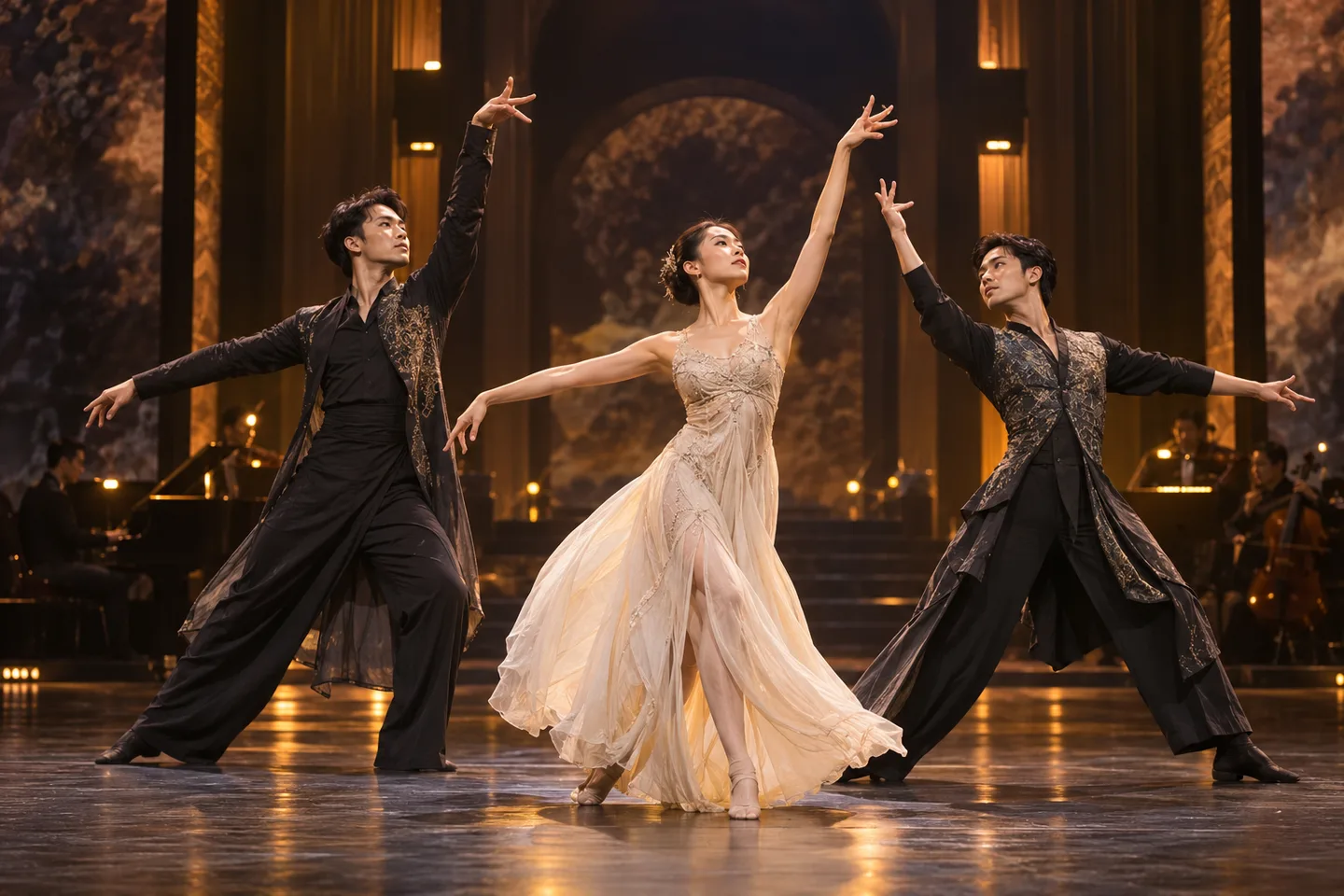
A performance happens once, in front of one audience. We film stage shows so the whole performance is kept, and a shorter film can be cut from it when you need one.
What do we film, and who is the record for?
We film dance recitals, concerts, choir and orchestral shows, cultural and heritage performances, talent competitions and school or community showcases.
Each group wants something different. Performers want to review their work. Families want to see their child or relative from start to finish. The organiser wants proof of the show and material to promote the next one.
Tell us who the main viewer is first, because it changes how we frame shots and what we edit. If the show follows a story or theme, tell us that too, so a highlight film can follow it.
Which records can we choose from?
| Output | What it is | Best for |
|---|---|---|
| Complete performance | The whole show or each act from start to finish, without cuts | Performers, families, archive |
| Separate act files | The complete recording split by group or act | Multi-act showcases, families of different groups |
| Highlight film | An edited story of the show with music and audience | Promotion. See event highlight films |
| Short clips | Vertical cuts of chosen moments | Social media, subject to permissions. See event social video clips |
| Rehearsal recording | A recording of a dress rehearsal | Planning, reviewing, or a safer fallback |
A short recap cannot replace a full performance. Our guide on choosing complete performances or a promotional show recap sets out what each leaves out.
What do we agree before the show?
- Act list and running order: names, times and any changeovers, so files are labelled correctly.
- What must stay visible: whole bodies in dance, conductor and sections in music, faces in speech and song.
- Permissions: performers, parents and guardians, and any rights held by choreographers, composers or venues.
- Lighting and sound: how the stage lights and the venue’s sound system will behave, and whether we can take an audio feed.
- Areas and moments to leave out: for example backstage, changing areas or certain pieces.
- Delivery: who receives which files, and how you review them.
The run-sheet filming planner turns the running order into a filming plan. For several groups on one programme, see delivering separate records for a multi-act showcase.
How do we work on the day?
Before the show, we check camera positions, the lighting and where the audience will sit. A wide camera keeps the full stage in view for the complete recording. Where the show needs it, extra operators add closer views, as described in multi-camera event recording. During the performance we move quietly and stay out of the audience’s sight lines.
Stage lighting often changes between pieces, so we go through the cues with your production team. Clear sound matters as much as the picture, so we ask early whether the venue can give us an audio feed.
Can we add a livestream or same-day edit?
Both are available on request, confirmed for each event. A livestream lets relatives who cannot attend watch the show. A same-day edit can be screened at a closing reception. Each depends on the venue’s connection and your schedule, so we check before the date.
The quote moves mostly with the number of acts, the rehearsal time and the records you choose. See how pricing works.
This is where we help: send the show date, venue and number of acts, and we will suggest a filming plan and the records that fit.
If you can tell us the show date, the venue and how many acts are on stage, that is enough for us to suggest a filming plan and the records that fit. We will then check whether we can be there.
Get a quote