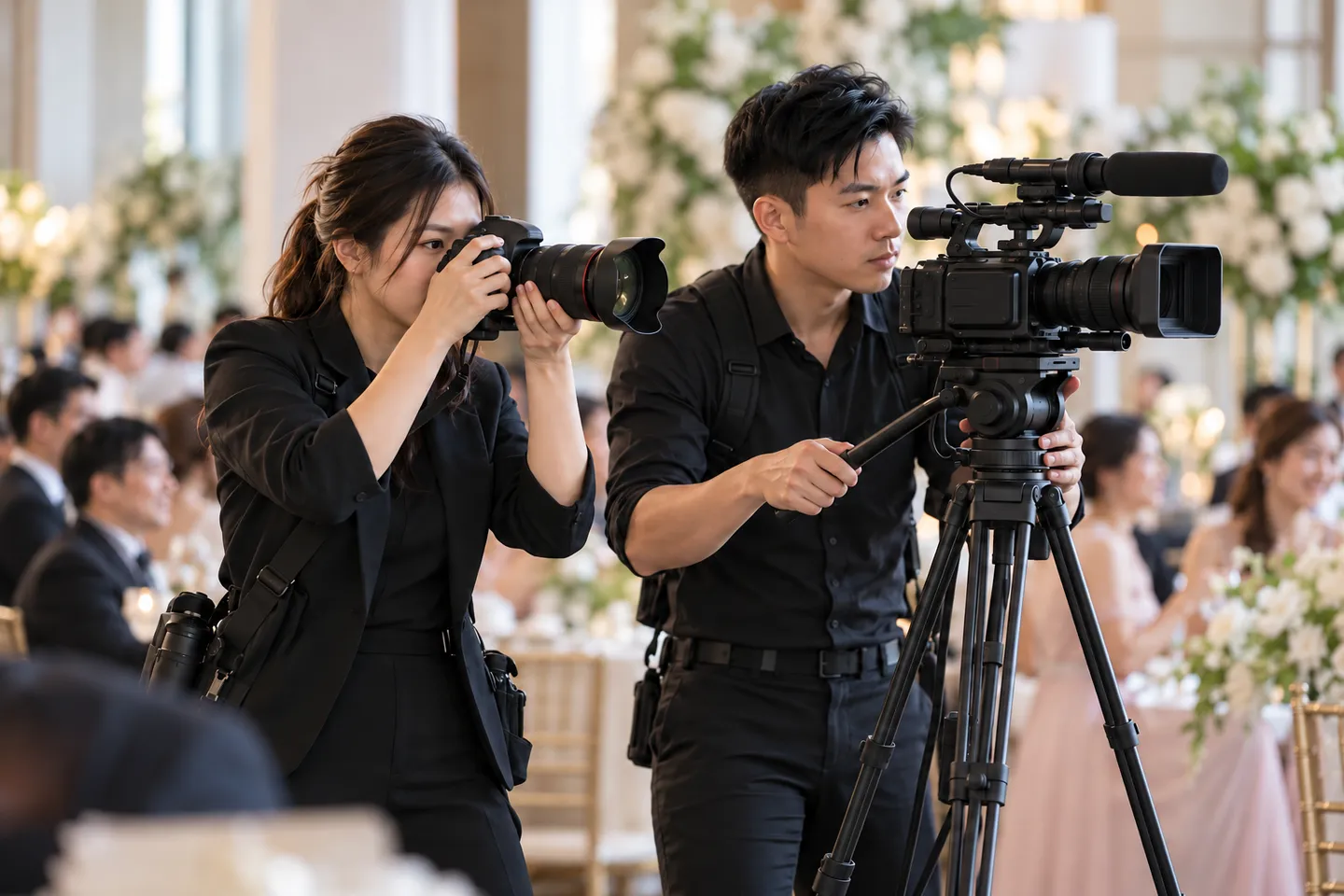
In short
- A photographer and a videographer often want the same moment from different positions.
- Agree who covers what, so nothing is missed and nobody blocks the other.
- You can bring your own photographer. We plan the video around them.
When you want both photos and video, each team needs to know its role before the day. Then both get the moments they need, and your guests are not stepping around two sets of equipment.
Why plan the two teams together?
A photographer and a videographer often want the same moment, from different places. A photographer may want a clean frontal shot. A videographer needs a steady position, room for movement and clean sound.
Without a plan, they either crowd each other or each assumes the other has the shot. A short agreement beforehand avoids both.
Who does what?
The simplest approach is to give each team a clear job, then mark the moments they share.
| Moment | Photographer | Videographer |
|---|---|---|
| Arrivals and portraits | Leads, with posed shots | Records candid moments around them |
| Key ceremony | Positions that do not enter the video frame | Fixed, steady position with clean audio |
| Speeches | Reactions and details | Continuous recording of the speaker |
| Group photos | Leads | Steps back, may record the arrangement |
| Candid moments | From a different position to the video | From a different position to the photos |
Write your own version of this table from the programme. The must-capture moments checklist helps you list what both teams need.
For example, at a cake-cutting the photographer takes the front position for a few frames and then steps aside, so the videographer holds the steady shot for the rest of the moment. This is an illustration of agreeing a swap, not a past job.
Can you arrange both for us?
Combined photography is available on request, confirmed for each event. If it is possible for your date, we plan photos and video as one coverage plan. If not, we work with the photographer you choose.
What do we agree before the day?
- The programme: one run sheet shared with both teams.
- The shared moments: which scenes both teams must capture and from where.
- Positions and signals: who stands in front, and how they swap.
- Flash: if the photographer will use flash, tell the videographer. Flash can spoil video, especially in a ceremony.
- Handover: when and how each team delivers files, and in what format.
- Permissions: who may publish what, and whether any moments are private.
The run-sheet filming planner is a good starting point, and the event video brief builder turns the answers into a brief. For the wider planning questions, see our guide to mapping time, people and simultaneous moments.
What if the ceremony has restrictions?
Some ceremonies limit where anyone, photographer or videographer, may stand. A nikah, a church wedding or a Hindu wedding may have guidance from the officiant or venue. Ask the officiant what is allowed, and give both teams the same answer. If only one position is possible, decide beforehand who takes it.
Who owns and shares the files?
Each supplier has their own terms for delivery and usage. Ask your photographer for theirs. If you plan to publish online, check the permissions and privacy guide and the filming and publication checklist.
If we arrange photography, it is listed separately in your quote so you can see each part. A photographer you bring is paid directly by you. See how pricing works, then message us the date and venue and we will draft a plan for both teams.
Tell us whether you already have a photographer or would like us to arrange one. Send the date, venue and the moments both must capture, and we will suggest who covers what and confirm the crew and travel.
Get a quote